















The serene and otherworldly gardens of Lotusland stand as an artifact of the past; its history is layered into the soil, the stonework, and the many visionaries who shaped it into what it is today.
Tucked in the hills of Montecito, Lotusland’s past and present make it one of the most incomparable botanical gardens in the country.
In the 1880s, the property was known as Tanglewood, a family residence and commercial nursery created by botanist Ralph Kinton Stevens. Unable to maintain such a large estate, Stevens sold the land to new prospects with architectural visions.
In the 1920s, the Gavit family transformed it into Cuesta Linda, adding Spanish Colonial Revival architecture and formal garden designs.
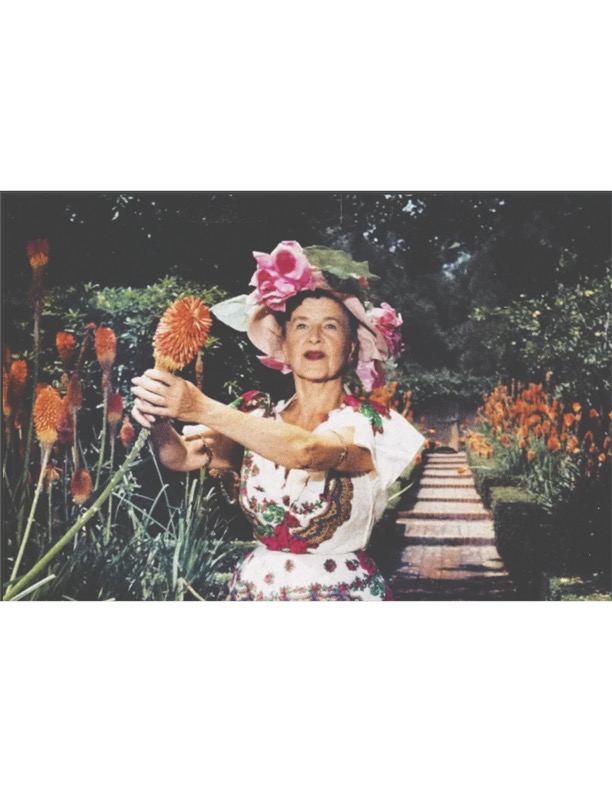
The estate’s identity shifted again in 1941 when its most influential owner arrived: Madame Ganna Walska, a famous Polish-born opera singer from New York.
Originally planning to come to California for a self-sustaining farm, whereas her sixth and final husband, Theos Bernard, was looking for property to become a retreat for Tibetan lamas
Walska controversially inherited significant wealth from four of her six of her marriages, generously supporting her opera career and small architectural garden projects, all while searching for her own purpose. Walsaka experimented with Eastern religions, Rosicrucianism, yoga, and meditation.
Drawn to the property’s potential for their visions, they purchased the 37-acre estate and initially named it Tibetland, hoping to host Tibetan monks. When those plans faded with her divorce from Bernard, Madame Ganna renamed her prenuptially-protected estate Lotusland in honor of the abundance of lotus flowers that bloomed in their original pond.
Walska devoted the next 40 years to transforming the estate into a botanical work of art. She worked closely with gardeners and designers and became known as the “head gardener” because of her dedication and involvement in her work. With the help of skilled landscapers and architects, the estate incorporated new visions, cultures, and abilities into the gardens.
In the 1950s, the original owner of the estate, Ralph Stevens, was brought aboard the Lotusland design team, creating the distinct iron entrance gates, the Theatre, and the Blue Gardens.
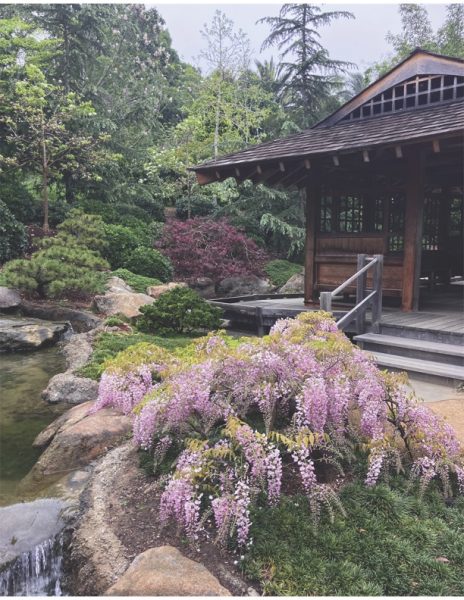
During the 70s, staff gardeners Frank Fujii and Oswald Da Ross worked alongside Madame Walska to create the Japanese Garden.
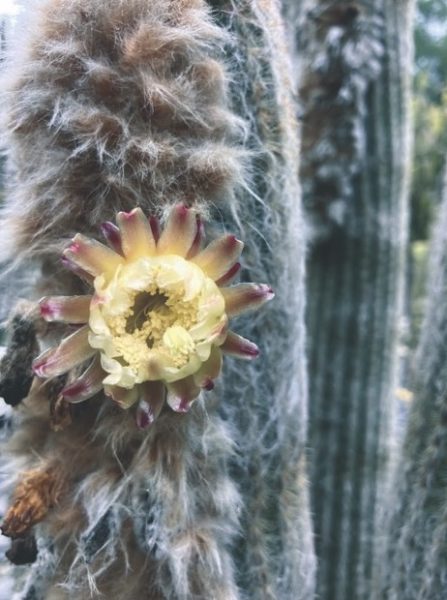
Charles Glass and Robert Foster were tasked with renovating the Cactus and Succulent Gardens and enlarging the Aloe Garden. Glass had his own project in creating the iconic Cycad Garden, containing large leafy stocks resembling palm trees.
Ceramics teacher Holly Ballenger remembers her last two visits, “I talked to one of the master gardeners, who is the longest standing employee. He worked with Madame Ganna Walska. He offered a wealth of information about the history of his work in the garden. He loves his work and feels blessed to be there after all these years, in the Bromeliad section. The docents and volunteers are eager to share information with self-guided guests.”
She added, “Madame Ganna Walska was an exotic plant collector. Thus, the garden is filled with exotic plants from around the world.”
Consequently, Walska’s passions drove her desire to create unique landscapes within Lotusland.
But the growth of Lotusland would not come easily; Walska decided to auction her jewelry to
reinvest in the land, showing her undying devotion to the quality and artistry of Lotusland.
Senior Baylor Wilson recalls his trip to Lotusland. “I remember when I took a field trip to Lotusland in 6th grade. It was like being in a fairytale. Everything felt surreal, and it was a really cool experience to be in so much nature. It felt like I wasn’t in Santa Barbara anymore but in a whole new world.”
When Walska died in 1984, she left the estate to the Ganna Walska Lotusland Foundation, which officially extended the property to the public. After years of restoration and planning, Lotusland opened in 1993.
The gardens faced tribulations of beetle infestations in oak trees in the Bromeliad gardens and a Cycad fungal infection. Both require removal and loss of invaluable sections of each garden.
The estate is estimated to be valued at around $50 million, including the value of assets and property investments. With the additional construction project of $30 million being in its final stages of completion
Today, it remains proof of Madame Walska, Charles Glass, and other dedicated team members’ commitment to the creation of a riveting landscape, offering visitors a priceless experience where its rich history and nature feel suspended in time.