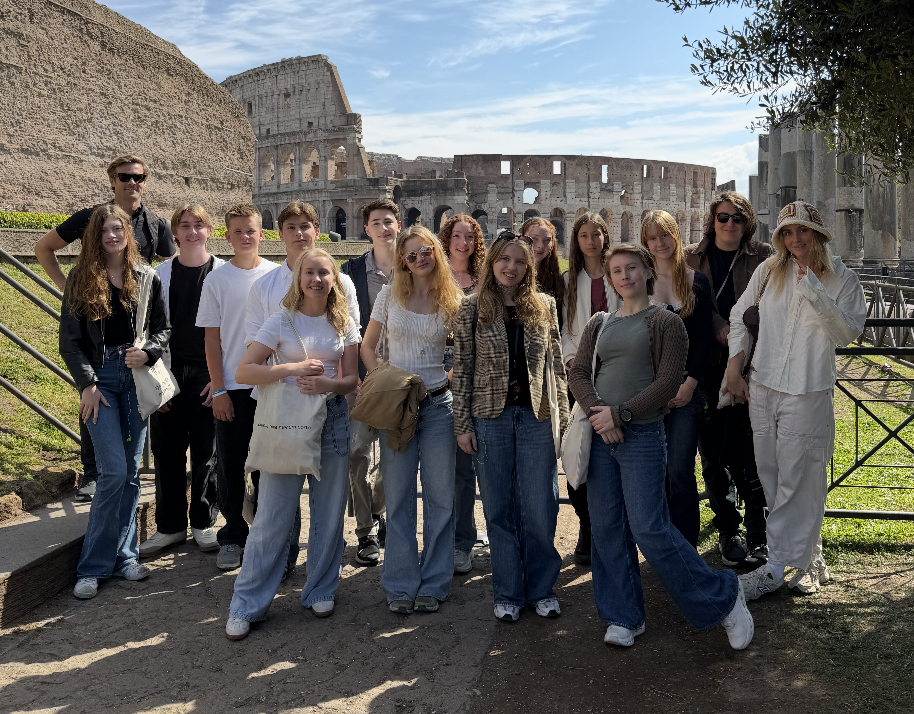

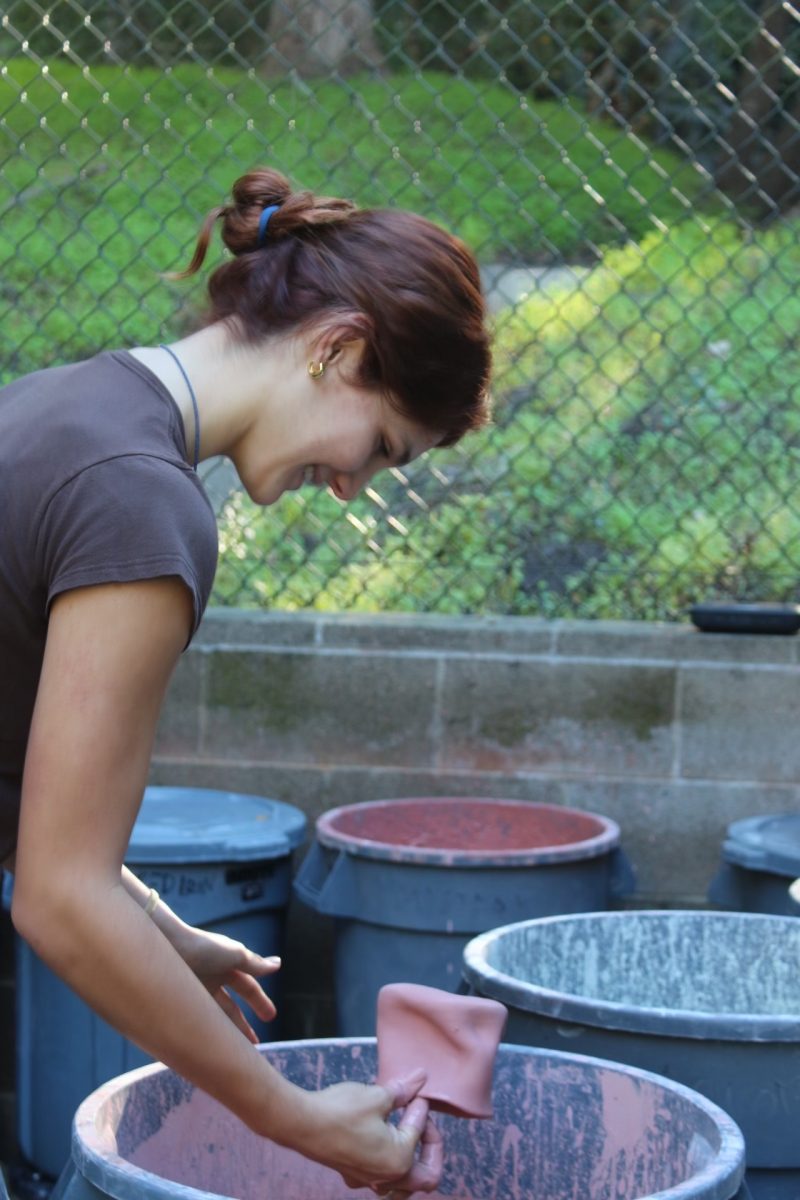













On April 22, 2026, Laguna students departed school at 11:30 am for a trip most would not expect to be excited for: the dump. Accompanied by their teacher, Mr. Faust, to the coastal Taijguas landfill in Goleta, the AP environmental science students would be given a detailed tour of the recycling unit, disposal site, compost area, and the area’s personal merchandise guard, Sam the Hawk.
As students stepped foot onto the sight they could not help but notice the strong smell lingering around the large facility, one student, Finlay Sutherland, saying that it “smells like a Greek salad.” Nevertheless, students were brought inside the Material Recovery Facility, or more commonly known as the MRF. There they saw up close how our trash is processed once it leaves MarBorg industries. Tour guides say that approximately 1 million pounds of trash and recycling are processed by their advanced MRF machine each day. The machine uses advanced AI technology to carefully sort out valuable recyclable materials or food waste from the conveyor belt. If uncompromised by food contamination, items like aluminum, plastics, steel, and cardboard are removed from the machine and processed for recycling. Food waste is also captured, where it is moved to large-scale anaerobic digestion chambers. Over time, the food decomposes and releases methane, which is trapped by the facility and used to create usable energy. The site claims that they generate enough energy to power its facility and an additional 2,000 homes in Goleta. They also profit by selling the low-quality compost to large agricultural farms. Essentially, people of Santa Barbara and Buellton are indirectly paying for people’s electricity because of their food waste.
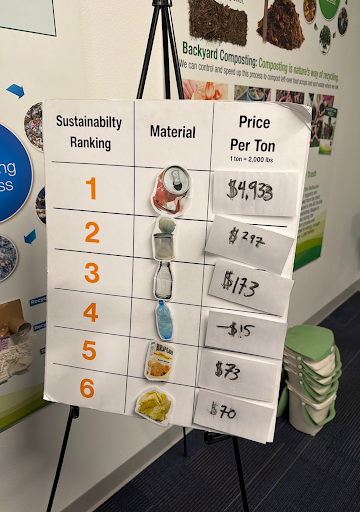
After seeing the recycling process, students were taught the reality of what can actually be recycled, and things getting in the way. Aluminum cans were deemed to be one of the best recyclable materials: they can be recycled infinitely, and are actually cheaper to recycle than to mine for. Plastic, on the other hand, can only be recycled one or two times before it is unusable. Of that plastic being disposed of, only plastics labeled with a “1”, “2”, or “5” in the center of the recycling symbol can be properly processed at their facility, assuming no food contamination has occurred. If recyclable materials contain food traces, the batch it is in is no longer recyclable and must be disposed of in landfills. Improper disposal of E-waste, like batteries, seems to be a recurring problem for the MRF machine, as devices like phones are known to blow up in the machine. Temporarily shutting down the facility until the machine is properly fixed, which costs workers time and energy due to human incompetence.
Finally, students were taken to the landfill site, where material that cannot be recycled goes to die. Large trucks transport garbage, where it is then compacted and buried. The bottom of the landfill is lined with impermeable material to prevent any ‘trash juice’ from contaminating nearby groundwater. As for the top, the only protection the area has against hungry seagulls is their natural predator, Sam the Hawk. Accompanied by his owner, Sam patrols the area, scaring off any seagulls who attempt to eat garbage.
The Tajiguas Landfill has almost 500 acres of land dedicated to storing our trash, which is estimated to run out of room by 2030. Students on this trip say that they are more conscious of their purchases after visiting the site, because they–like most–are worried about what will happen when more landfills continue reaching maximum capacity.