





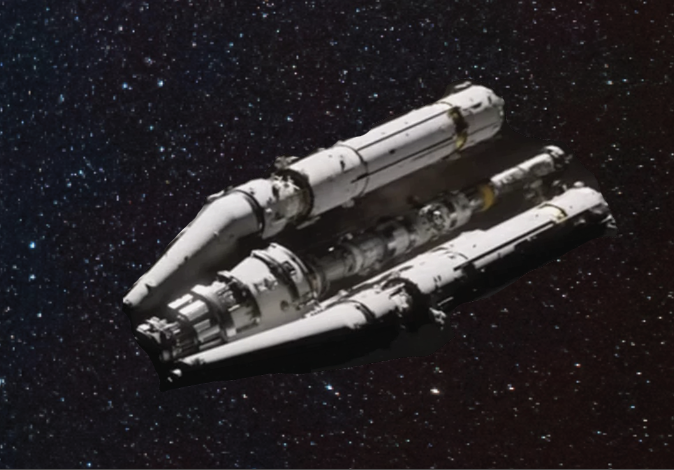













Breaking box office records this spring, “Project Hail Mary” follows Ryland Grace, a middle school science teacher who wakes up alone on a spaceship with no memory of how he got there, only to discover he has been sent on a mission to save Earth from extinction. As his memories gradually return, Grace must rely on science and an unexpected alliance with an alien to complete a task that will determine the fate of humanity. Based on Andy Weir’s 2021 novel of the same name, the film’s greatest strength lies in how closely it follows the original story.
Senior Carter Plowman said he was “really shocked” by how accurate the film felt, explaining that “there weren’t any major points where I thought, ‘that doesn’t make sense,’ and overall it stayed really true to the book, even though I read it a few years ago.” Although some of the novel’s philosophical and scientific detail is trimmed down, he said the film still feels “complete and coherent.”
At the same time, that faithfulness comes with trade-offs. Senior Alex McClintock noted that while the movie remains true to the novel, it loses some of the depth that defines Weir’s writing. “One aspect that was kind of lost was the scientific detail that Andy Weir captures so well.” Still, he acknowledged that this shift is understandable, adding that “you’re trying to make a movie and keep it entertaining and fast paced, so some of that detail is going to get compressed.”
That faster pacing ultimately works making it more accessible, especially for viewers who have not read the book. “I didn’t read the book before watching the movie, but I didn’t feel like I was missing out at all. The movie was so entertaining, and the story was told so clearly that I never felt like I was lacking context or missing anything important,” senior Evie Comis said. Her experience reflects the film’s ability to stand on its own while still appealing to fans of the original story.
The novel’s added detail continues to resonate with readers. Alex said he still prefers the book overall because “It goes into more detail, especially before Grace gets on the rocket, and that really helps you understand not only the plot but also Grace as a complex character.” He also noted that knowing the ending ahead of time shifts the viewing experience, explaining that he was “more focused on how they were going portray the characters rather than what was going to happen.”
Beyond its plot, the film’s emotional core lies in the relationship between Grace and the alien Rocky, a dynamic that multiple viewers highlighted as a standout element. Alex said the film captures their evolving connection particularly well, especially “at the beginning when Rocky thinks Grace is essentially stupid because their knowledge and understanding of the world is so different,” making their growing understanding of each other “really beautiful.”
Evie echoed this sentiment, saying, “You feel really invested in their friendship, and that’s what makes the ending work so well, because after everything they go through, they end up coexisting and relying on each other.” This relationship helps balance the film’s focus on a largely single main character, adding emotional depth to the story.
Ryan Gosling’s performance as Grace further strengthens that characterization. Alex noted that while much of the book’s humor comes from Grace’s internal monologue—something the film cannot fully replicate—Gosling still captures the character’s personality well, calling the portrayal “very accurate” to the original.
While the novel offers greater scientific depth and detail, the film succeeds by prioritizing pacing and emotional impact. In doing so, “Project Hail Mary” remains true to the spirit of the original story while reaching a broader audience, ultimately satisfying both longtime readers and new viewers alike.