



















NIL stands for Name, Image, and Likeness and refers to the right of student-athletes to control and monetize their personal brand through endorsements, sponsorships, and social media.
Introduced in 2021, NIL allows college athletes to earn money from their personal brand without losing their eligibility to play sports.
In recent years, NIL money has exposed structural problems that challenge the integrity of college sports. Schools supported by large brands or wealthy donors are able to recruit athletes by
offering larger NIL opportunities.
Smaller schools, by contrast, now struggle to compete and attract highly recruited athletes amid a widening gap between rich and poor athletic programs.
Because there is more NIL money at certain schools, athletes are increasingly choosing schools based on their NIL packages rather than their programs. Young athletes are now faced with a load of money they can’t say no to.
This concept is undermining traditional recruiting and the balance of college sports. The process becomes a bidding war, with the larger programs almost always winning.
If this trend continues, the underdog stories that make college sports so exciting may disappear as this disparity in NIL money continues to increase.
We might never experience the feeling of a true Cinderella story in March Madness (the annual NCAA college basketball tournament). Like the 2018 Loyola Chicago team, which, despite being the 11th seed, persevered to the final four, upsetting multiple high-ranked teams. Smaller programs are competing less, and the tournament is becoming increasingly predictable, reducing the excitement fans once felt.
 This divide between programs has been evident during recent years of March Madness.
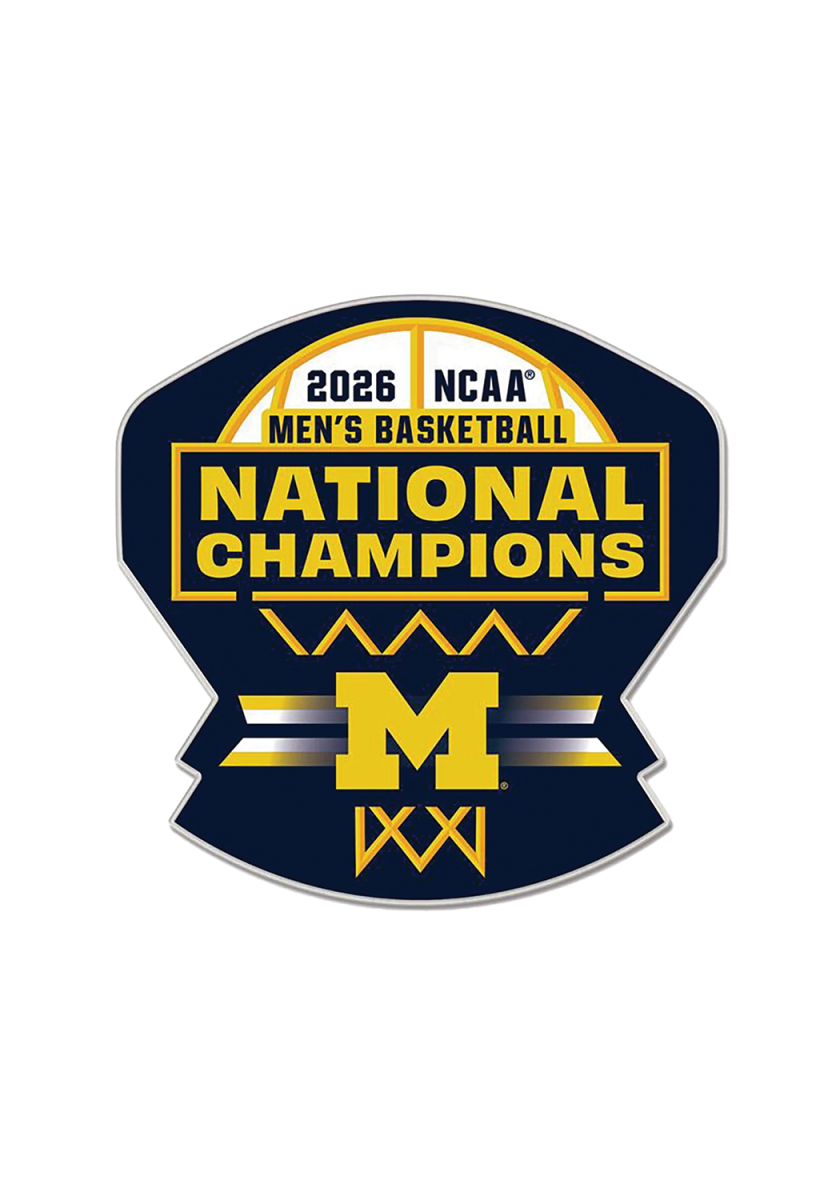
In 2025, we saw all four No 1 seeds reach the Final Four for only the second time in history. Along with this, the tournament featured some of the fewest upsets in recent history, with no double-digit seeds advancing past the Sweet 16.
If NIL continues to grow, college basketball, along with other sports, will become very predictable. Bigger schools with more money will continue to stack talent, while smaller programs won’t get the same chance to compete.
Fans may now begin to lose their excitement about the possibility that any team could make history in March Madness.
Because college sports are now heavily based on NIL money, athletes are constantly entering the transfer portal in hopes of landing better deals.
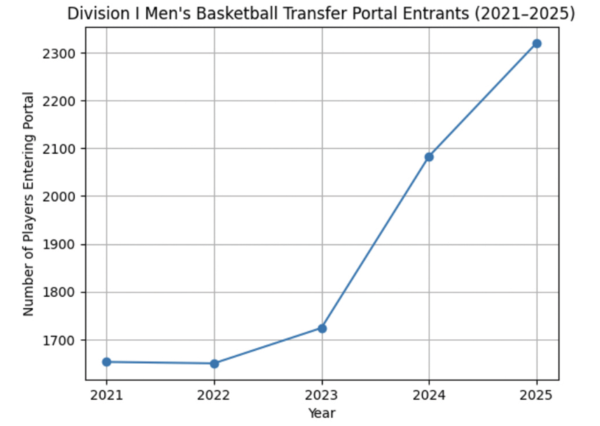
In 2025, 2,320 men’s college basketball players entered the transfer portal, which makes up for about 40%. Compare this to 2020, when only about 650 players entered the portal. This is bad for two reasons: it destabilizes rosters and weakens a program’s long-term development. NIL is making it extremely hard for coaches and colleges to build towards long-term success, since half of their team is entering the portal.
While transfers occur in all sports, they are specifically prevalent in basketball and football due to the opportunity for large NIL packages.
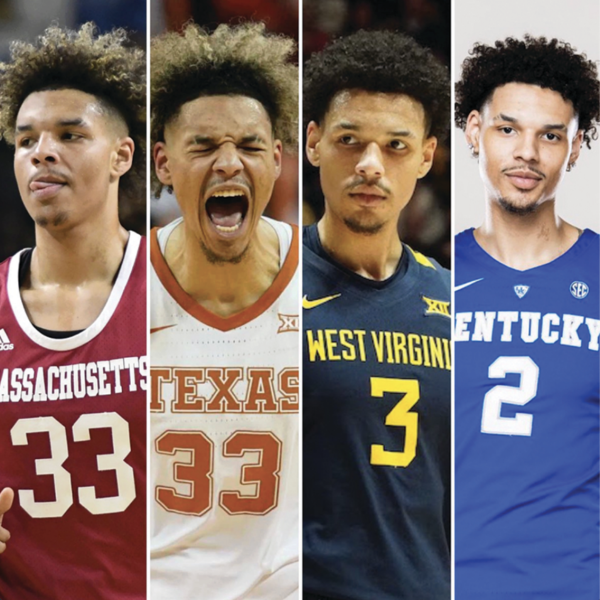
Take Tre Mitchell, for example: a highly talented 6’9” center who has played on four different teams in his five years in college, who went from the University of Massachusetts to Texas, West Virginia, and then Kentucky.
Although there were other reasons for his transfer such as coaching and play style, we can’t ignore the NIL opportunities he had at these different schools.
This is a prime example of why colleges are struggling to build up a program, with top players like Mitchell transferring practically every year.
With so many athletes entering the portal, coaches and programs fight to reel in new players every year rather than developing them from true freshmen.
Additionally, these athletes are now being reshaped to focus on scholarships and social media instead of their classes and education. College sports are meant to support education, but since NIL money has been present, it is taking away from that.
The pay gap between players can also create distractions and tension in the locker room, harming team chemistry.
For example, a true freshman could be earning hundreds of thousands of dollars while a 4-year senior could be earning nothing. Further conflicts may arise if they believe money is influencing playing time or other decisions, steering away from team goals.
Another aspect to consider about NIL money is the fans. College sports thrive on passion, loyalty, school pride, and support for players throughout their college careers. However, due to money-driven decisions and constant transfers, it weakens fans’ connection to their school, making it harder for them to support it.
NIL money was intended to reward college athletes for their hard work and dedication, but has instead created new problems that challenge the integrity of college sports.
From the increasing gap between big and small programs to encouraging constant transfers, NIL money is tearing the college sports world apart.
The focus on NIL earnings is shifting young athletes away from what truly matters: team loyalty. If NIL policies are not revised, the world of college sports as we know it could collapse, with success depending on how much money a school has, rather than teamwork, talent, and long-term program development.