
























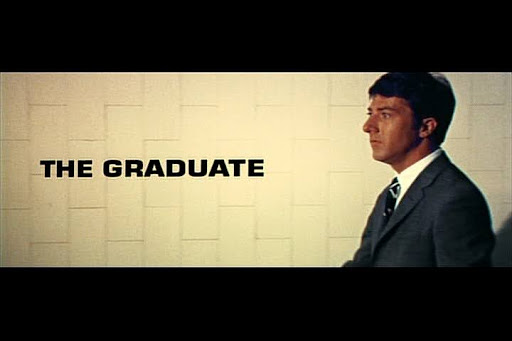
The dramatic, somewhat problematic rom-com “The Graduate” grossed $104.9 million in box-office sales when it was released in 1967, making it the highest-grossing film of that year. That is over $1 billion today. But what made this movie such a wild success?
Based on Charles Webb’s 1963 novella, the screenplay was written by Buck Henry and Calder Willingham and directed by Mike Nichols. The film centers on a young man named Benjamin Braddock (played by Dustin Hoffman) who has just moved back to his parents’ Pasadena home for the summer after getting his bachelor’s degree. Shortly after moving back, Benjamin meets Mrs. Robinson (played by Anne Bancroft), the wife of one of his father’s business partners. Mrs. Robinson attempts to and eventually succeeds at seducing Benjamin, and they begin an affair that lasts for the majority of the summer.
As if having an affair with a married woman who is twice his age wasn’t scandalous enough for Benjamin, he agrees to take Mrs. Robinson’s daughter, Elaine (played by Katherine Ross), on a date after much pressure from his parents. This complicates his relationship with Mrs. Robinson, ultimately forcing him to choose between the two women.
Benjamin’s giving in to Mrs. Robinson’s advances toward him, though he knows their relationship is morally wrong, as well as his willingness to date Elaine simply to appease his parents, reveal the helplessness he feels. He is unsure of how his future will look, and because of this, thinks that he has no control over his present, either.
How does it hold up?
The obviously problematic element in this movie is Benjamin’s relationship with Mrs. Robinson. However, the movie does not try to paint their affair as acceptable. The dramatic age gap and infidelity are not dismissed or made light of. It is quite the opposite, in fact, as the problems within this dynamic create the main conflicts of the film.
Some viewers also believe Benjamin’s behavior toward both Elaine and Mrs. Robinson to be unsettling, with Roger Ebert describing him as “a self-centered creep.” It could be argued, though, that his character is written this way on purpose to remind the viewer that he is not a perfect protagonist.
What has it inspired?
“The Graduate” is widely considered to be one of the main contributors to the New Hollywood era, a filmmaking movement from the mid-1960s to the early 1980s that emphasized violence, social issues, and anti-heroes within movie plots. It was also one of the first films to use only pop music in its score – its entire soundtrack being songs from the American folk-pop duo Simon and Garfunkel.
Overall, “The Graduate” is an American classic for a reason. With creative cinematography, an iconic soundtrack, and a plot extremely controversial for its time, this film is impossible to forget, even today. Its intentionally ambiguous ending leaves viewers to wonder what Thanksgiving will possibly be like in that family.