





















WARNING: Potential Spoilers Ahead. Reader discretion is advised.
Guillermo del Toro’s “Frankenstein” is a visually stunning piece, from its breathtaking cinematography to the symbolic and stylish outfitting of each character.
The detail that immediately stuck out to me was the extremely meticulous attention to even the smallest aspects of each character’s outfitting.
Each character has a personalized, perfected wardrobe, but Mia Goth’s characters’ wardrobes are unparalleled.
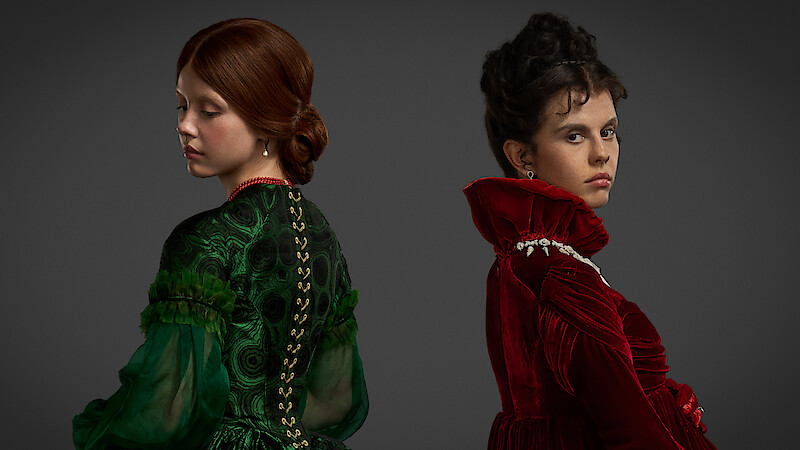
Mia Goth plays not only Victor Frankenstein’s mother, Claire Frankenstein, but also his lover, Elizabeth Lavenza. Kate Hawley chooses to define the differences between these two characters by making color usage both prominent and unique to each.
Red is perhaps one of the most symbolic colors Hawley utilizes. Red is a symbol of blood and, by extension, death, and in this film Claire Frankenstein is the color red.
The first half of “Frankenstein” is visually dominated by red. We see that Claire is wholly enveloped by a rich red dress and veil. She is what ultimately motivates Victor to seek life — or, rather, a solution to death.
Victor’s attire blends period-accurate 1800s fashion with elements reminiscent of the rock ‘n’ roll eccentricities of the late twentieth century. Kate Hawley cites David Bowie and Prince as inspirations for certain components of his style.

As the story progresses, so does Victor’s clothing. Victor’s ego grows, and the flamboyance and audacity of his attire do in turn.
As Victor builds the creature, ravaging deceased men killed in battle for viable body parts, he wears red gloves as what is essentially a second skin — a symbol for the blood on his hands, and an echo of his mother — he is doing this in her name, after all.
“The mother and the home are red,” said del Toro in a Netflix interview, “so if Victor loses [those things], that’s the color that should haunt him the rest of the movie.”
If red symbolizes death and dread, then green symbolizes life and hope. Green has long been associated with nature, plant growth, and the arrival of spring.
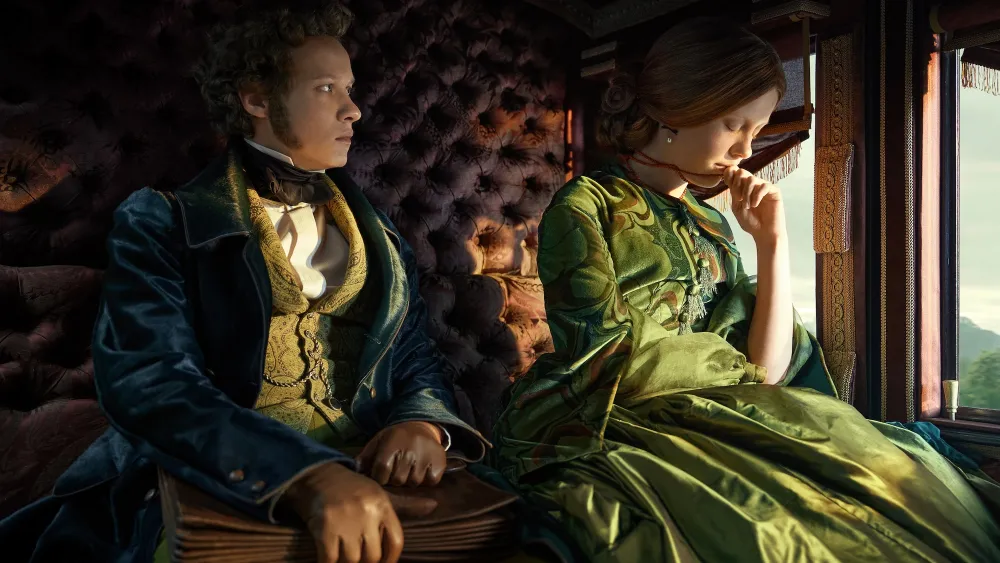
“My interest in science leans towards the smallest things. Moving with nature, perhaps the rhythms of God. I’ve always searched for something more pure; marvelous.”
— Elizabeth Harlander
Like Claire, Elizabeth’s clothing also represents her inner self. Rather than being a symbol of death, however, Elizabeth symbolizes nature and possibility.
She is an oddity; a woman who, rather than embracing the traditional life of a nineteenth-century woman — wifehood and motherhood — spends her time pursuing intellectual pursuits.
Insects, in particular, deeply fascinate Elizabeth, and a significant portion of her attire reflects this fascination.
The green dress pictured above is designed to mimic a butterfly’s wings and patterns.
“Guillermo wanted Elizabeth to be very ethereal, and there’s an iridescence and ephemeral nature to some of [the] colors and fabrics that helped us [portray this,]” Hawley said to Refinery29. “It’s all about echoing those insect and beetle-like qualities.”
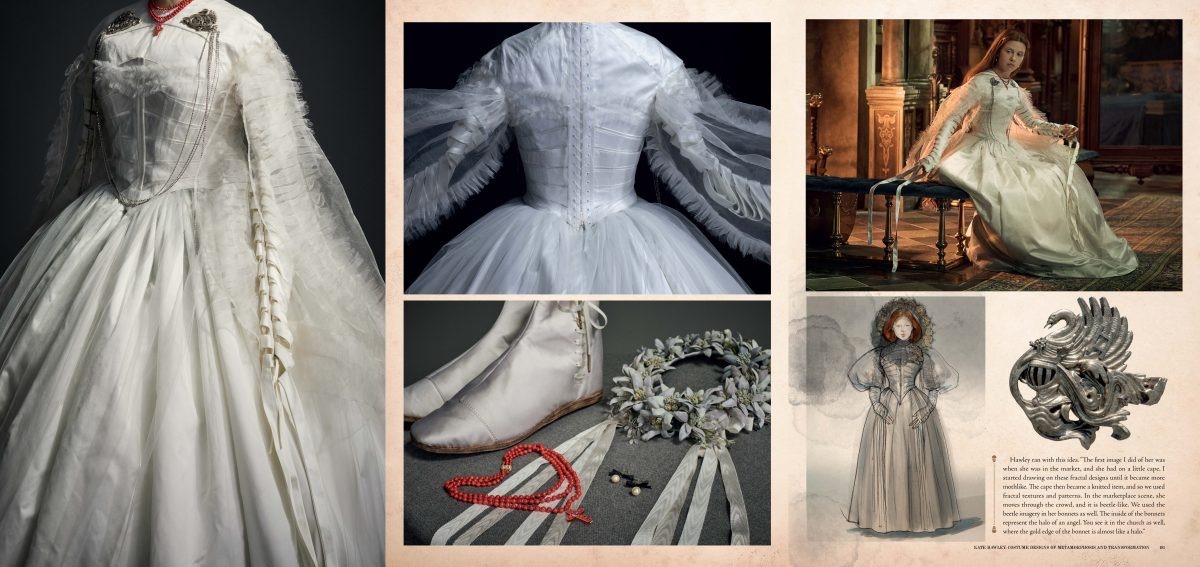
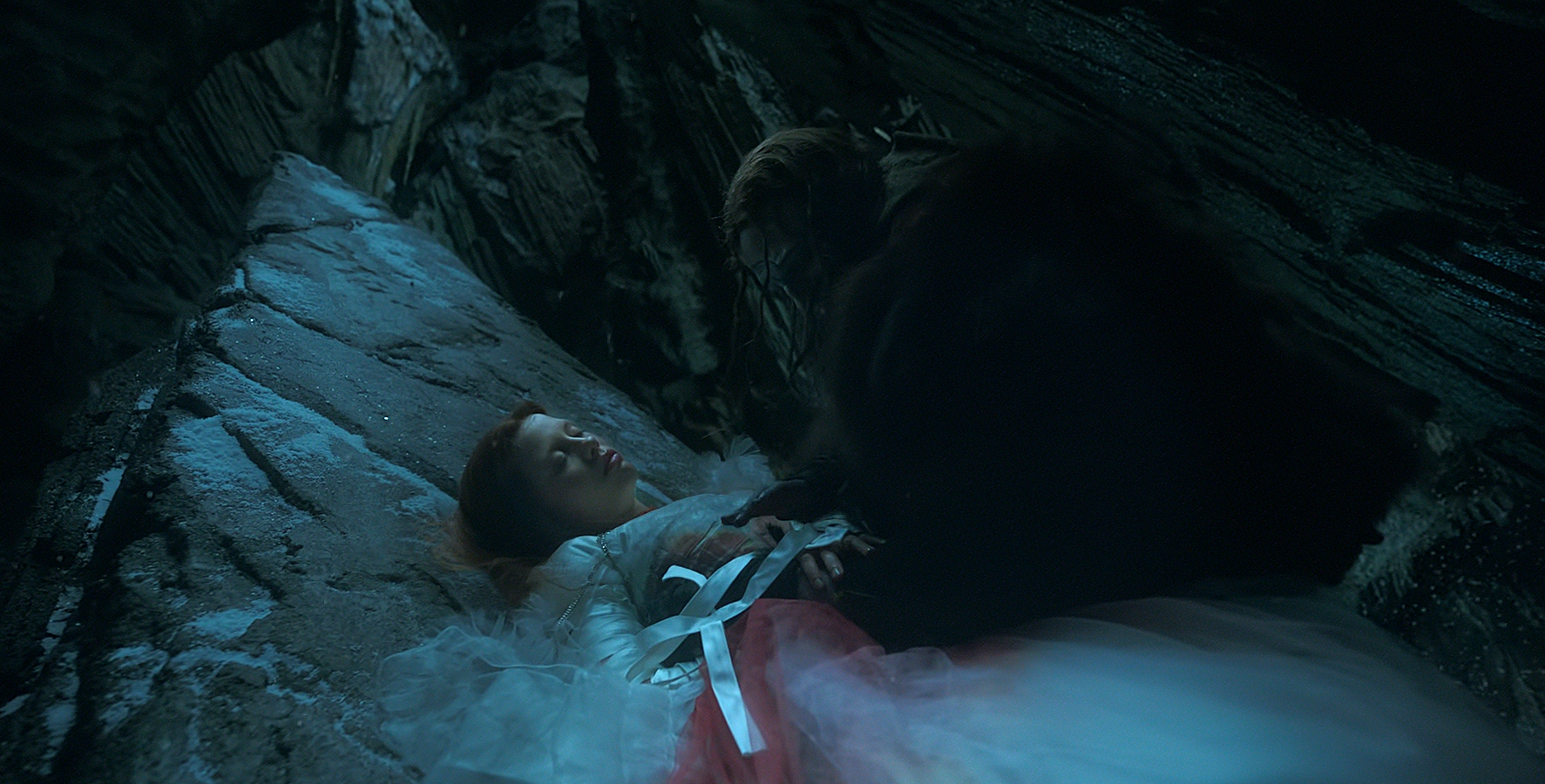
Finally, perhaps the most iconic piece of all: Elizabeth’s wedding dress. It is a gorgeous piece that Hawley says “echoes the creature’s bandages and his skeleton framework.” Elizabeth, in this, rather than being a mere love interest to Victor, works as a parallel to the creature and a foil to Victor, and this dress reflects that.
“The ribbons on her arms are … a lovely homage to [the 1931] Frankenstein and [the 1935] Bride of Frankenstein,” said Hawley in an interview with Vogue Hong Kong.
When Victor, in a fit of envy and rage, attempts to shoot and kill (or at least wound) The Creature (Jacob Elordi), he misses and ends up hitting Elizabeth instead. In this moment, Elizabeth and Claire finally merge into one — the hopeful greens and blues of Elizabeth’s everyday attire and the pure, innocent white of her wedding dress are stained red — the red of Victor’s guilt and loathing towards his mother.
Hawley’s creative vision is not only aesthetic, but also a map for the souls and ambitions of the characters of “Frankenstein.” The attire of each character propels the film thematically, letting us peer into their souls.