




















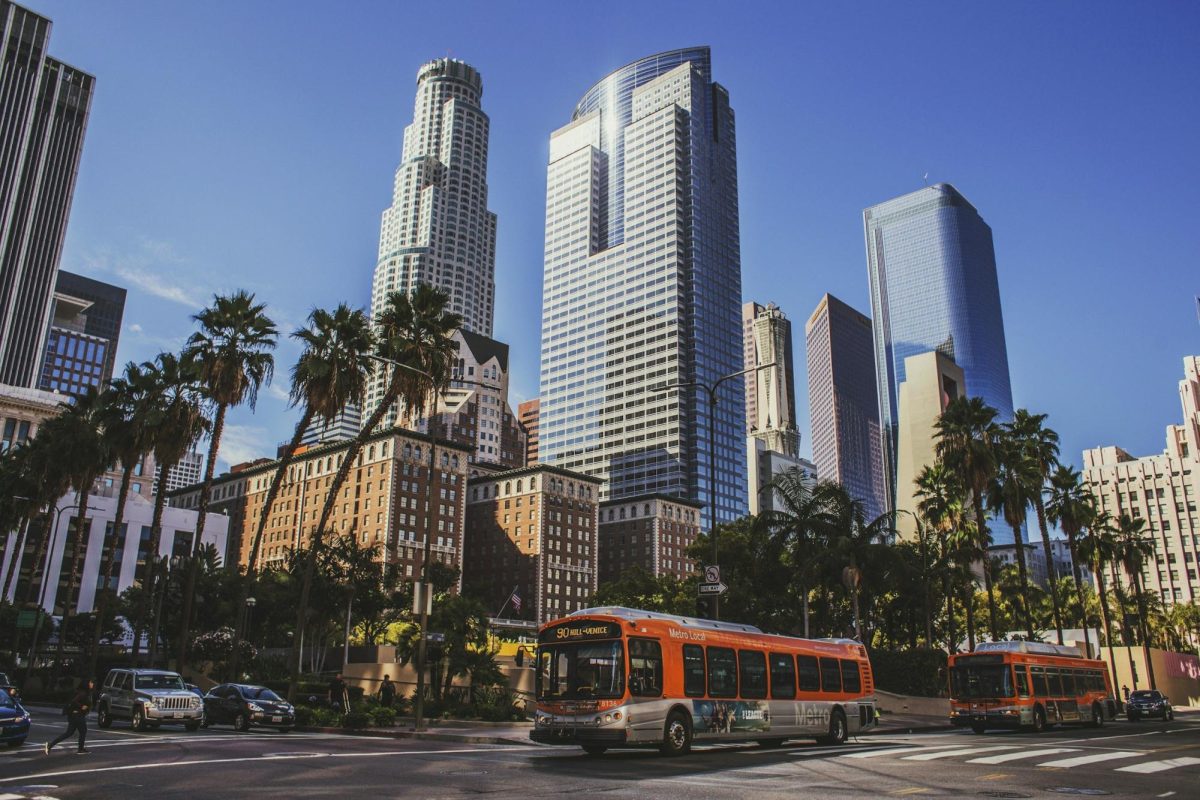
Although the Olympic flame is still years away from being lit in Los Angeles, the real race has already begun: Can the nation’s most car-dependent metropolis reinvent its transit system in time for 2028?
The city’s notorious congestion has long been one of its defining features.
As former LA resident Lila Foster puts it bluntly: “LA is a city that’s always been known for its traffic.”
Now, with the clock ticking towards the games, Los Angeles finds itself undergoing a massive infrastructure effort that should, hopefully, transport millions of visitors smoothly during the two-week event and reshape the city’s transportation network for decades to come.
Olympic preparations have a way of transforming a city’s public spaces and infrastructure.
Senior Enzo Vinoly, who visited Paris during preparations for the 2024 games, described how the anticipation was palpable on every corner. “While I was in Paris, [Olympic preparations] were happening everywhere. They were building the volleyball courts, cleaning the Seine, putting up the big Paris 2024 sign in front of the Palais-Royal, and construction was everywhere. Olympic preparation definitely took over the city.”
Paris used the Olympics as a way to accelerate major urban initiatives, such as new metro lines and investments in walkable and bikeable streets.
LA is adopting similar initiatives, leveraging the games as a hard deadline to push through transit projects under the banner of “Twenty-Eight by ‘28”—a campaign launched by LA Metro to complete 28 major transportation initiatives before the opening ceremony.
A cornerstone of LA’s Olympic preparation is the expansion of its Metro Rail network. Projects nearing completion include the Purple Line extension along Wilshire Boulevard, which will connect Beverly Hills, Century City, and Westwood.
The Crenshaw/LAX line, which is set to connect directly to Los Angeles International Airport, will be something entirely new for LA: a rail connection from downtown to the airport.
Senior Robie Polos emphasizes how critical these projects are. “Public transit improvements are a crucial step in preparing for the 2028 Olympics. Such an event draws large crowds from all over the world who will need to get around the city throughout the duration of the games. While some will drive their own cars or take rideshare services, the city’s public transit network will see a large influx of new riders that will require increased service.”
LA’s metro system, still relatively young compared to networks in London, Tokyo, or Paris, simply has not yet grown to match the sprawl of Los Angeles.
Many LA residents don’t regularly use the metro system due to its limitations.
“Public transportation was never really an option because it didn’t necessarily go exactly where I needed to, so we mostly drove ourselves around,” Lila said.
But with the Olympics on the horizon, expansion of these networks is both necessary and urgent.
Even with expanding rail lines, gaps remain in the web of connections to Olympic venues. 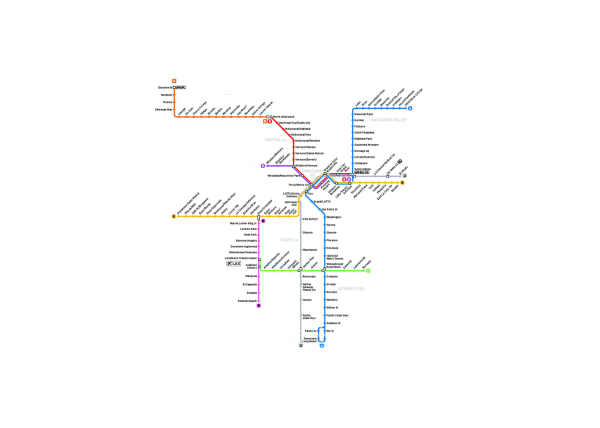
To bridge these gaps, LA is preparing to implement a supplemental bus system that will operate during the Games. Buses will serve direct routes from transit hubs to arenas and stadiums, aiming to move large numbers of visitors quickly and reduce private car use.
“The supplemental bus system,” says Polos, “if implemented correctly, will help to relieve extra pressure on the Metro system, as well as serve dedicated routes to Olympic venues that might not be well connected to the existing system.”
But buses can only do so much, and their estimated capacity raises concerns about their effectiveness if not implemented appropriately: “buses, of course, won’t be able to run as frequently or carry as many passengers as a metro train, but considering that the supplemental bus system will be focused on the Olympics, frequency and routes can be planned to account for the increase in riders,” Robie says.
In other words, if efficiently managed, they could prove a crucial piece of the logistical puzzle for the games, but they won’t have any long-term effects on LA’s transportation network.
Los Angeles’ reliance on cars is the result of historical infrastructure initiatives during the mid-century boom.
In the early 20th century, LA boasted the largest interurban train network in the world, with streetcars reaching deep into far-flung neighborhoods. But this system was dismantled, paved over, and replaced by freeways a few decades later. When the Summer Olympics last came to LA in 1984, there were no metro rail lines at all.
“Hopefully,” Polos says, “LA is starting to reduce past planning mistakes and create a city that is better connected and not so clogged with traffic.” The 2028 games may be a turning point, a chance for LA to reconcile with its past transit mistakes and invest in infrastructure that could define its future.”
Despite the ambitious construction boom, some doubts still remain about how effective these projects will be at reducing congestion during the Games themselves.
“Traffic will probably still increase during the 2028 Olympics, simply due to how many people in the area already drive and will probably make the trip to LA to go see one of the events,” Polos said.
While gridlock may be an unavoidable short-term reality, the truest test of LA’s 2028 transit investments will play out in the decades following the Games. If the city and region continue to build upon the new foundations laid for the Olympics, preparation may finally start to shift from a maze of endless freeways to one where transit, walking, and biking are realistic alternatives to driving.
Cities like Paris have leveraged the Olympics to reimagine their urban landscape. Los Angeles now has a similar opportunity to use the global spotlight as a catalyst for change. The world will arrive expecting traffic and chaos, but just might leave with a different image: a city on the cusp of urban reinvention.