



















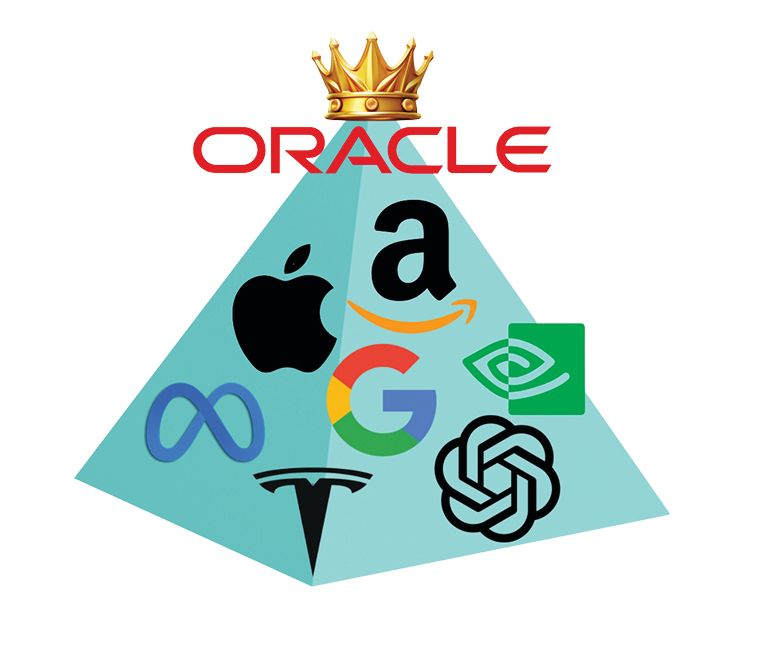
Larry Ellison is no stranger to the spotlight, yet one of his most impressive achievements may be how quietly he led Oracle into becoming one of the globe’s tech giants. For decades, Oracle was synonymous with databases and backend enterprise software. Now it is staking a claim deep in AI and cloud infrastructure, creeping into the ranks of the world’s most valuable companies.
Born in 1944, Ellison co-founded Oracle in 1977, and for decades, the company’s identity stayed in relational databases and enterprise tools. As cloud computing began to reshape technology in the 2010s, Oracle appeared as a late entrant, but in recent years, it has accelerated so rapidly that it is almost hard to believe.
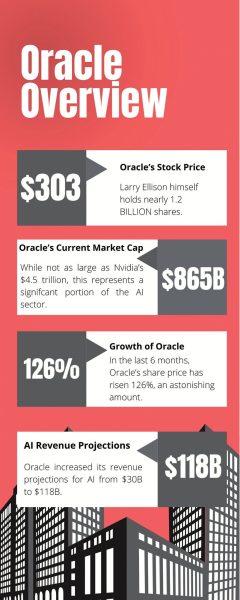
In its fiscal first quarter of 2026, Oracle reported that its “remaining performance obligations,” essentially contracted future revenue, surged 359% year-over-year to $455 billion.
To put it another way: Oracle now has half a trillion dollars’ worth of committed business that it will deliver in the future.
Ellison himself has tied this growth to Oracle’s multi-cloud and AI offerings. As he stated, “MultiCloud database revenue from Amazon, Google, and Microsoft grew at the incredible rate of 1,529% in Q1.”
That kind of insane growth helps explain why Oracle’s valuation has reached such extraordinary heights. In September 2025, some analysts predicted that Oracle could add over $234 billion to its market value, pushing it close to a trillion-dollar valuation. Just a few days later, Ellison’s net worth jumped by more than $100 billion in a few hours after an earnings announcement where Oracle drastically increased revenue projections. This record-breaking wealth gain placed Ellison as the richest man in the world for a few days, with the total value of his assets reaching nearly $400 billion.
But Oracle’s climb doesn’t seem to be fueled by hype. As a part of a massive AI infrastructure project known as Project Stargate, Oracle has partnered with OpenAI and SoftBank to build AI data centers and expand its cloud capacity. The deal, which is estimated to be around $300 billion over four years, seeks to add 4.5 gigawatts of additional capacity in the U.S. alone. Stargate is definitely a critical piece of the explanation for Oracle’s rise to the forefront of tech.
As The Data Center Frontier put it, Oracle is “transforming cloud into a core national-scale compute and energy resource.”
One of Oracle’s most understated tactics that has allowed it to exist for so long is growth through accumulation, not media attention. Rather than vying for consumer headlines, Oracle has quietly accumulated huge cloud contracts, dozens of future commitments, and massively scaled up its data center operations. In its fiscal quarter three of 2025, Oracle’s performance commitments rose to $130 billion, driven by significant sales agreements.
At that time, Ellison confidently stated, “customer demand is at record levels,” and that Oracle was “on track to double its data center capacity that year.”
However, this “sneaky” ascent is not without risk. Analysts estimate that Oracle may need to borrow up to $100 billion over the next four years to build the infrastructure necessary to meet its contractual commitments. Others warn of leverage risk, especially if OpenAI or other companies fail to actually pay them. Even Moody’s, a trusted credit rating agency, has flagged potential “counter party risk” in the size of Oracle’s commitments. Beyond the leverage risks, Oracle competes with giants like Amazon, Microsoft, Google, and newer AI infrastructure firms, all of whom are hungry for revenue.
What distinguishes Oracle from many of the flashy tech brands is that it is building what others need. In the AI era, the foundation matters: whoever controls computing, power, and data infrastructure will wield incredible influence over those building LLMs (large language models) or AGI (artificial general intelligence). Unlike some consumer platforms, Oracle’s business has been the backend of enterprises, governments, and critical systems for decades. That experience gives Oracle a kind of resilience, since once contracts are signed and infrastructure is in place, switching costs are too high to back out of the deal.
Of the students asked about Oracle for this article, 100% of them had never heard of the company before.
That kind of anonymity is a testament to the leadership of Larry Ellison, who built a critical infrastructure business and kept it out of the limelight while growing at a rapid pace.
He may not be the wealthiest person at the time of writing this article, but if Oracle continues to grow at the projected pace, he certainly will be again.