














Lois Lane: You trust everyone and think everyone you’ve ever met is, like… beautiful.
Superman: Maybe that’s the real punk rock.
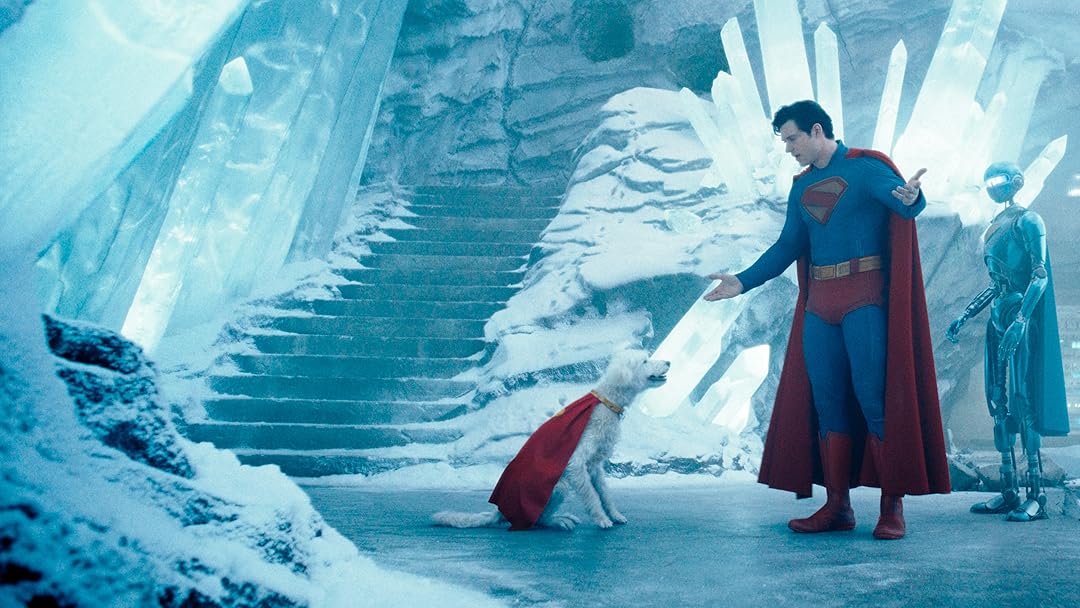
Superman has long been regarded as the superhero embodiment of hope. This year, “Superman,” directed by James Gunn, the award-winning director of “Guardians of the Galaxy“ and co-chairman of DC Studios, was released. Under his direction and David Corenswet’s portrayal, this traditionally fair, compassionate, and hope-embodying character was elevated in several ways.
David Corenswet’s Superman stays true to not only the values and character traits of Superman, but also to the message of the original comics — that when one has extreme power, they should always strive to use it in fighting for justice.
“Superman is very much a superhero who is a supporter of all life, not just human life,” Laguna Blanca’s philosophy instructor and substitute coordinator, James Savage, said.
Superman extends kindness to everybody and everyone, even those who might not be deserving.
“He’s stronger than everybody else, he can fly, and he can do all of this other stuff, but, like, he’s also got this heightened sense of morality and right-doing that evolves with his power,” Savage said.
Superman’s strengths are not only his physical powers, but also his kindness and compassion. Despite having super-strength, super-speed, and super-hearing, he actively chooses to use those powers to fight for humanity, rather than against it.
The concept of nurture versus nature is another prevalent theme, both in “Superman” and in reality. Under James Gunn’s direction, we get a unique portrayal of Superman’s birth parents. When Superman was sent to Earth as a baby, a semi-damaged recording was sent with him.
The first half seems relatively innocent: “We love you more than heaven, our son,” says Jor-El, Superman’s father, “we love you more than land. Our beloved home is soon to be gone forever.”
“Hope vitalizes our hearts,” continues Superman’s mother, Lara Lor-Van, “and that hope is you, Kal-El. We have searched the universe for a home where you can do the most good and live out Krypton’s truth. That place is Earth.”
However, the second half of this message gives the initially touching speech a much darker meaning: “The people [on Earth] are simple and profoundly confused. Weak of mind and spirit and body. Lord over the planet as the last son of Krypton.”
Despite Superman being sent to Earth for ill-intended reasons, he did not become the domineering ruler his biological parents had intended him to be. Instead, he was raised by Martha and Paul Kent, two kind, hard-working, and caring farmers.
“Even though his parents’ intent for him was to rule over Earth, he rose above that because he grew up with humans,” says Savage.
Superman’s conscious decision to enforce kindness and compassion — even after learning what he was expected to do on Earth — is something we can all strive to imitate in our daily lives, especially in this incredibly politically polarized world.
Today, kindness is becoming increasingly scarce, and a lack of compassion has become the norm.
Superman’s altruistic worldview has been, and shall continue to be, extremely impactful on the way younger generations present and discuss their socio-political views.
James Gunn utilizes Superman’s compassionate and forgiving nature to refocus on superheroes who serve not only as warriors for humanity but also as moral guides.
Rather than kindness being portrayed as a weakness or a vulnerability, it is shown to be one of Superman’s biggest strengths.
This sends a message to younger generations that, in today’s world, the most heroic thing you can do is be compassionate. This is a message that not all pieces of media make an effort to portray.
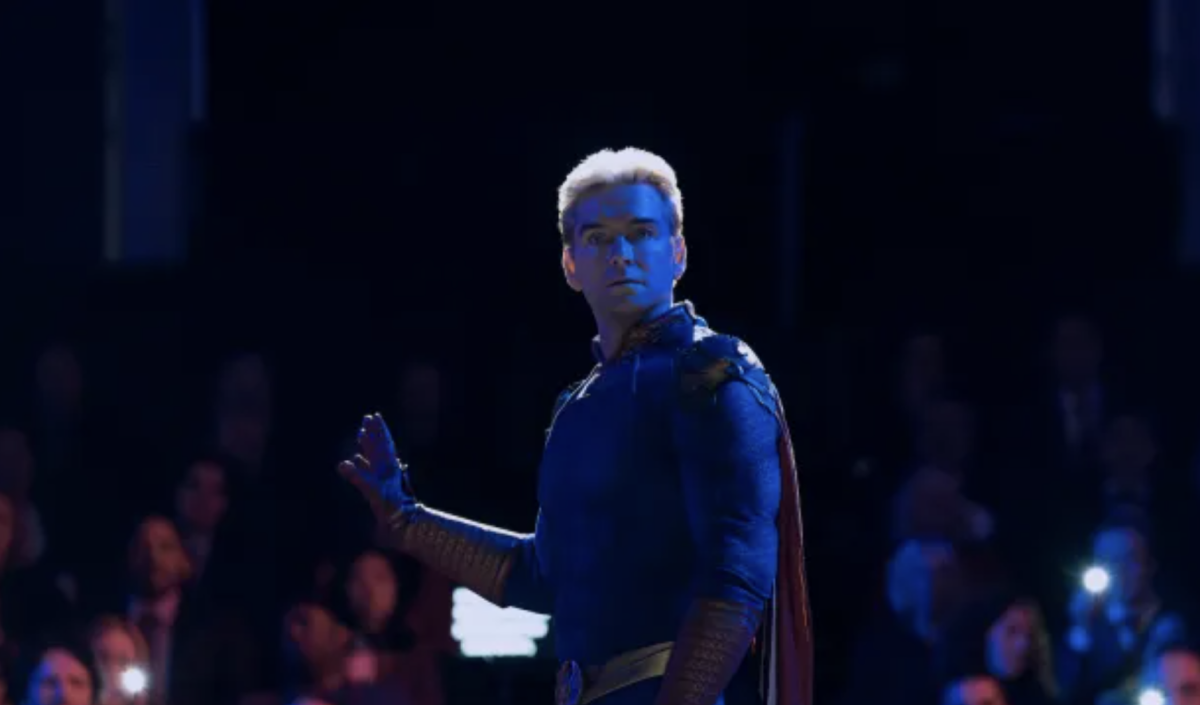
“I think we see a much more pessimistic portrayal of superheroes in shows like ‘Invincible’ and ‘The Boys,’” Savage said.
In modern media featuring superhuman elements, heroes have started to be used as symbols of corruption, greed, and cynicism, and while these characters are undeniably interesting and politically thought-provoking, they are not exactly role models.
James Gunn and David Corenswet intentionally use Superman’s character as a foil to these concepts. He is unwaveringly hopeful, generous, and forgiving, traits that starkly contrast both modern-day heroes and modern-day politics.
“Superman” challenges the common idea that darkness equates to depth and that kindness equates to naïvety. “There’s this idea that to be punk rock you have to be kind of like, focused on being negative or being cynical,” Savage said, “but in a world that’s already mean and cynical, the punk thing to do is to be kind.”
Making an effort to be empathetic and understanding is arguably one of the most important qualities to maintain in this political era. It serves not only as an example for younger generations, but also as a general guideline for daily life.
When one strives to look at life with a positive attitude, even if it initially feels superficial or too intentional, that positivity will eventually start to consume both themselves and the people around them.
The importance of kindness is often understated, and “… [it] isn’t praised as it should be,” Savage said. Oftentimes, an act of kindness will not be given a second glance, and instead, people let war, hate, and cruelty cloud their minds.
Extending compassion to those around us is not difficult in the least, and being kind is incredibly simple. So why is it that we often choose to let pessimism and apathy into our lives rather than optimism and empathy?
In this world, cynicism and brutality are often mistaken for strength, but David Corenswet’s Superman reminds us that our true strength lies in our compassion. Hope and kindness are not signs of naivete; they are signs of our humanity.
In this era, where hope is dwindling and negativity is flourishing, the best way to challenge preexisting expectations is by being compassionate in the face of apathy. After all, Superman’s kindness isn’t a weakness; it’s what makes him human.