










Carl von Clausewitz coined the phrase “War as the continuation of politics by other means.”
The post-World War II order, founded on the UN Charter and international law, aimed to supplant Clausewitzian power politics with diplomatic negotiation.
Nuclear weapons created the threat of mutual destruction, forcing countries to move away from traditional means of conflict, directing them to pursue their interests through economic sanctions and proxy conflicts.
On Jan. 3, the international paradigm took a severe blow. US forces executed Operation Southern Spear, capturing Venezuelan President Nicolás Maduro in a military operation.
The Constitution states that all acts of war must have congressional authorization.
According to The White House, the action was not an act of war, but rather a law enforcement operation and self-defense action to combat drug trafficking and narco terrorism, which is why it received no approval from Congress.
The White House provided no evidence that the strike and the targeted individual posed any immediate threat to the national security or that Maduro’s arrest would have any significant impact on the drug trade.
On Jan. 8, the Senate advanced a resolution restricting Trump from any further actions in Venezuela without a congressional mandate.
Maduro is indeed a ruthless dictator who, according to the UN and international organizations, was fraudulently elected and whose regime is credited with thousands of killings.
The operation is a blatant violation of both international law and the Constution’s War Powers Clause. President Trump has not hidden his real intentions behind the Venezuela operation and made it clear that US oil companies will “spend billions of dollars, fix the badly broken infrastructure,” and “start making money for the country.”
The most revealing statement came later: “We built Venezuela’s oil industry with American talent, drive, and skill, and the socialist regime stole it from us.”
Venezuela is not an imminent threat to the United States. The operation was not self-defense. It was, by Trump’s own admission, a matter of resource extraction.
Today, China wants Taiwan. Russia wants Ukraine. The United States has taken the moral high ground and upheld and supported the sovereignty of both nations.
China and Russia witnessed the United States invade a sovereign nation for its natural resources.
History offers a chilling parallel. In the 1930s, Japanese militarists justified their invasion of Manchuria and China with a straightforward argument: the Western powers had established their empires through conquest and exploitation; therefore, why could Japan not do the same?
The Venezuela operation is not an isolated incident but part of a pattern. Trump’s threats to seize Greenland through military force have triggered an unprecedented crisis within NATO.
The US obtaining Greenland for security and defense purposes is a questionable justification provided by the administration, as the US has recently decreased its military presence in Greenland.
Greenland does, in fact, have substantial rare metal and gas deposits.
Danish Prime Minister Mette Frederiksen issued a warning:
“If the United States chooses to attack another NATO country militarily, then everything stops, including NATO.”
The European Union released a joint statement declaring that American military action against Greenland would “end NATO” and would be met with a unified military response.
The alliance that has been the cornerstone of Western security for 75 years is on the brink of collapse over American territorial ambitions.
European leaders are now discussing military action against the United States to defend a member state.
Even if NATO stays united, permanent irreversible damage has been done, and trust across the Atlantic has been fractured.
In 1953, the CIA overthrew Iran’s democratically elected Prime Minister Mohammad Mosaddegh.
After he nationalized Iran’s oil industry, which cut into the profits of the Anglo-Iranian Oil Company (now BP). The CIA did not acknowledge its role until 2013, 60 years after the event.
That intervention helped spread anti-American sentiment that led to the 1979 revolution, the hostage crisis, and decades of antagonism with Iran.
In 1954, the CIA deposed Guatemala’s President Jacobo Arbenz because of land reform that threatened the United Fruit Company’s holdings.
That operation, which the CIA has since acknowledged, “squashed a 10-year effort to build a democratic state” and triggered a civil war that killed up to 200,000 people over three decades.
In 2003, the United States invaded Iraq. The official justification was that Iraq was developing weapons of mass destruction, which did not exist.
Iraq sits on the world’s fifth-largest oil reserves.
Venezuela is just the latest chapter, and the immediate diplomatic fallout is already severe.
Brazil’s President Lula condemned the operation as “attacking countries, in flagrant violation of international law” and “the first step toward a world of violence, chaos, and instability.”
Russia and China, predictably, are using this to position themselves as defenders of international law and sovereignty.
The irony is thick, given their own records.
The interim Venezuelan government, led by Delcy Rodríguez, faces an impossible situation.
They are trying to maintain stability while US oil companies prepare to move in and exploit resources that, under international law, still belong to Venezuela.
Despite Trump’s promises, gas prices may not go down. Saudi Arabia has threatened production cuts up to 90% if Venezuela’s gas enters the market, which would counter any supply increase from Venezuela.
The real money is not in cheaper gas for Americans; it is billions in profits for US oil companies.
Maduro’s human rights violations did justify intervention, but Operation Silver Spear was not a liberation effort, but rather an illegal power grab, which violated both US and International law.
US oil companies moving into Venezuela will disproportionately benefit US companies over Venezuelan citizens.
International law, held together by the threat of mutual destruction in the aftermath of World War II, has been proven once again not to prevent a return to Clausewitzian power politics.
EMPIRE RETURNS
The United States has seized Venezuela’s president without congressional approval, threatening the post-World War II order while bringing an authoritarian regime to an end.
February 7, 2026
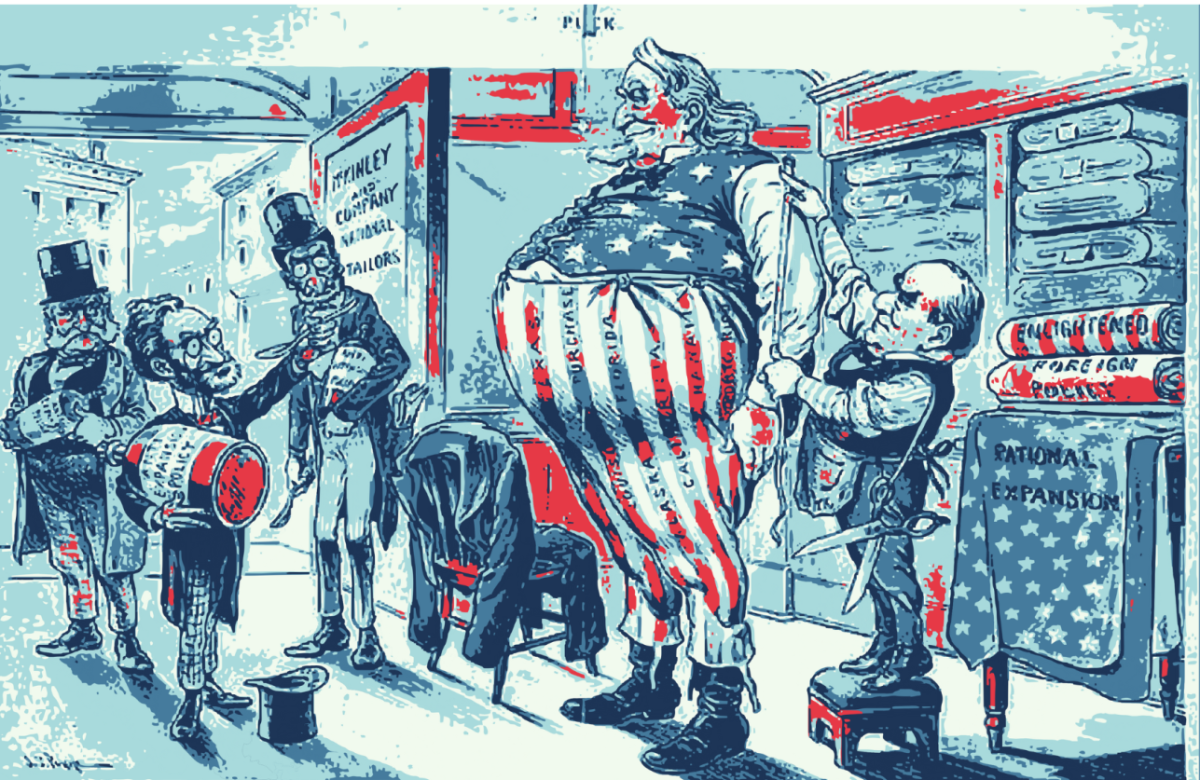
Edited Version of a Cartoon by John S. Pughe, first published in “Puck” (USA version), 5 September, 1900.
Donate to The Fourth Estate
$50
$500
Contributed
Our Goal
Your donation will support the student journalists of Laguna Blanca School. Your contribution will allow us to purchase equipment and cover our annual website hosting costs.
More to Discover




About the Contributor

Niccolo D’Agruma, Editor-in-Chief
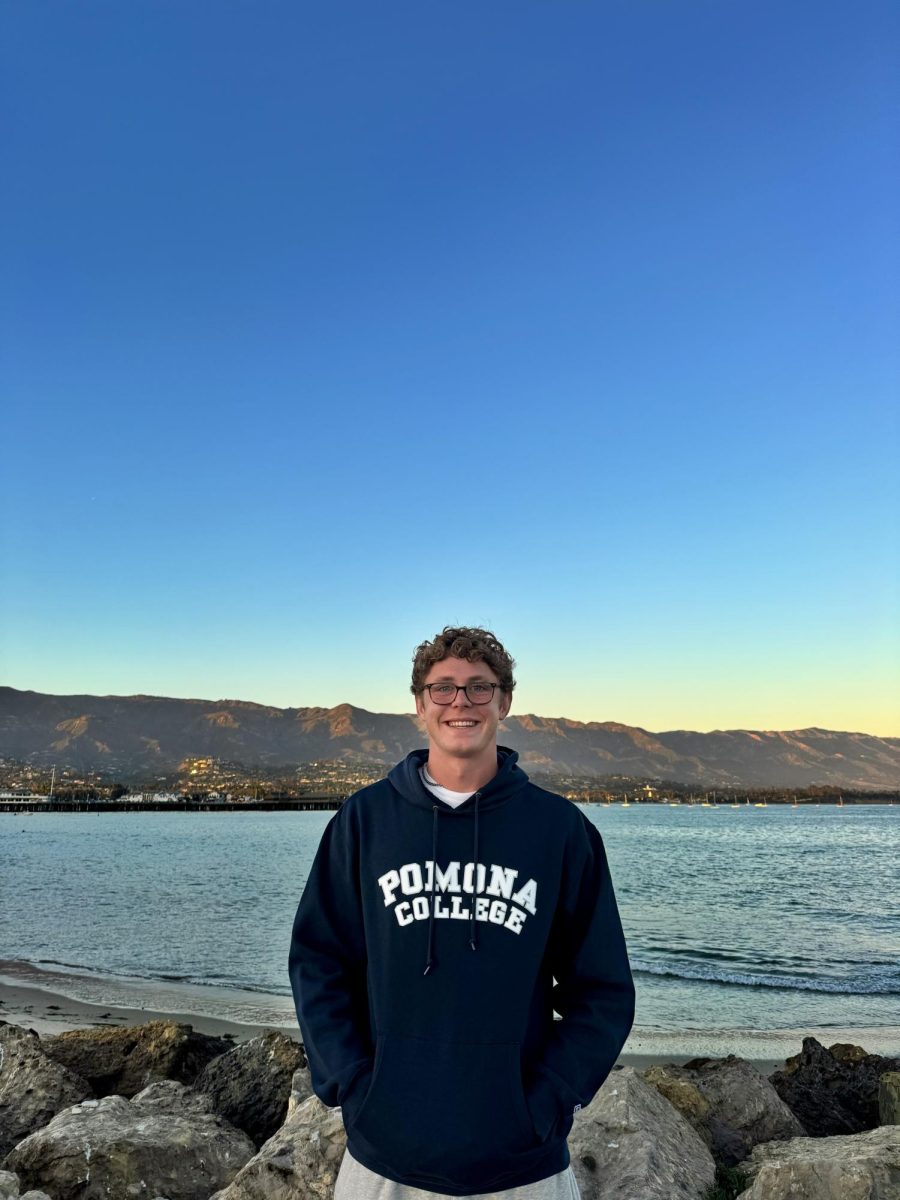
Niccolo D’Agruma, a current Senior and Editor-in-Chief, joined the publication in the fall of 2022. Beyond his leadership responsibilities, he primarily covers key domestic, international, and social issues. Outside of the publication, he is interested in acting, international relations, philosophy, and current national and global issues.